A $27 Thrift Haul, One Bedsheet, and a Borrowed Lamp: How I Faked a Big-Budget Collab Set
The brief landed on a Tuesday: warm, elevated, lived-in. My apartment looked like a laundry chair with wifi. I had one week, one brand video, and a budget that I had already mentally spent on coffee.
I did not hire a stylist. I did not rent a studio. I spent $27 at two thrift stores, pulled a bedsheet off my own bed, and borrowed a lamp from my neighbor. The final video looked like a budget epic. Here is the receipt, the shot list, and the mistakes I would not repeat.
The $27 receipt
- Pair of brass candlesticks: $6
- Stack of hardcover books: $5
- Woven basket: $4
- Amber glass vase: $7
- Linen napkin: $3
- Small wooden frame: $2
Total: $27. The bedsheet backdrop was $0 because it was already on my bed. The lamp was $0 because my neighbor Deb is a saint. The lamp was also the real star, which I did not know until editing.
The 20-minute set build
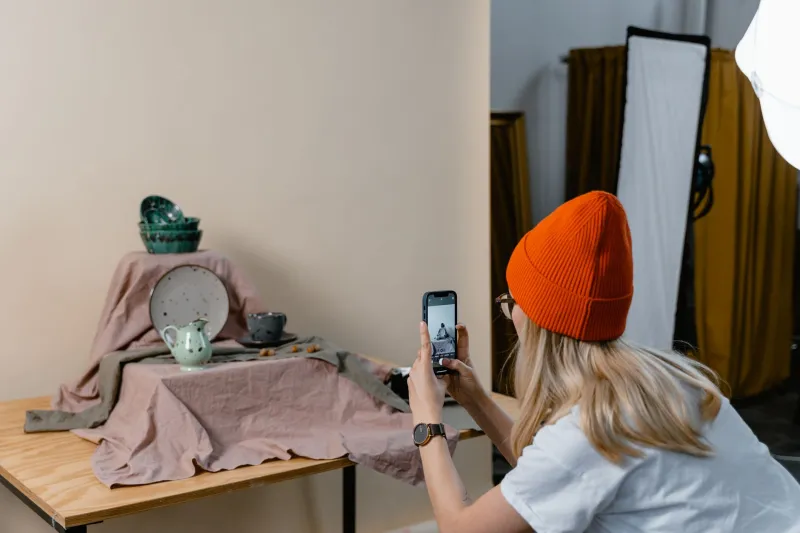
I pushed my dining table against the wall, clipped the bedsheet to a curtain rod with binder clips, and tucked the bottom edge behind the table. I put the lamp behind the product, slightly off to the side, and turned off the overhead light. That was it. The first version looked like a yard sale. The second version looked like a room.
The trick was subtraction. I started with every thrifted item on the table because I was afraid of empty space. The camera hates fear. I removed the basket, then the frame, then one candlestick. The shot got better every time I took something away.
The three details the camera actually loved
- The lamp glow. A single warm lamp behind the product gave depth and a soft edge. Overhead light flattened everything into a police lineup.
- The bedsheet negative space. I did not iron it. I steamed it with a kettle and prayed. The camera saw a soft wall, not a bedsheet with a history.
- One texture. The linen napkin did more work than five props. It gave the frame a little lived-in truth without making it look cluttered.
The shot list that saved me
- Wide opener: table, lamp, product, breathing room.
- Hero push-in: product at eye level, no clutter.
- Hands shot: open, pour, touch. Hands sell lived-in faster than any caption.
- Texture insert: napkin, book edge, candle.
- Pullback: reveal the set without revealing the sheet corners.
- CTA: product in frame, room still warm.
I shot vertical first because the brand needed 9:16 and 16:9. I protected the center of the frame so the wide version would not lose the product. That one habit saved me from a reshoot.
Mistakes I made
- I left the bedsheet wrinkled on take one. It looked like a hospital curtain with ambitions.
- I mixed daylight and tungsten. My product went from creamy to haunted.
- I overstyled the first setup. Every thrifted item on the table looked like a yard sale, not a mood.
- I used a real candle near fabric. Do not do this. LED candle, always.
- I forgot the lamp cord. The hero prop had a visible black snake.
What the brand noticed first
Not the candlesticks. The light. They asked if I had a lighting designer. I said I had a neighbor named Deb and a lamp with a dimmer. They also noticed the top edge of the frame was clean, which was the bedsheet’s greatest performance.
The brand did not ask how much I spent. They asked if I could repeat the setup for the next deliverable. That is the real compliment. A set is not good because it is expensive. It is good because it is repeatable.
What I would spend next time
I would still start thrift-first, but I would buy one roll of gaffer tape and one cheap steaming tool. The tape hides cords. The steamer saves the bedsheet. I would also shoot a test frame before the product is even unwrapped, because the camera tells you what it loves faster than your ego does.
The takeaway
Collab polish is not a spending contest. It is knowing which three details the camera will love and removing the other twelve. The $27 was not magic. The restraint was. And if anyone asks, yes, the lamp is available for future bookings. Deb has rules.