The 1:12 Mark: What 47 Rewatches of 2026's Loudest Trailer Taught Me About Hype
I have a bad habit. Whenever a trailer gets stamped with "most-viewed in 24 hours" and a dozen brand accounts start posting countdown graphics, I open it once, roll my eyes at the orchestral swell, and close the tab. I am not proud of this. But it's a defense mechanism. Hype is a product now, and I've gotten picky about what I let through the door.
Then September 2026 happened. A trailer for Glass Harbor — a coastal sci-fi mystery that had been rumored for two years and memed for at least one — dropped on a Tuesday morning. I watched it once. Then twice. Then I started taking notes. By the end of the week I had watched it 47 times, which is not a number I'm putting on a résumé, but is a number I am absolutely putting in this essay.
Because somewhere in those 47 views, I found the exact second the trailer stopped selling me a mood and started selling me a movie. And once you see it, you can't unsee it in every other campaign.
The Setup: Why I Was Already Suspicious
The first 60 seconds of the Glass Harbor trailer are expensive and empty. Drone shot over a gray harbor. A synth hum that sounds like a refrigerator dreaming. A voiceover from a character who is clearly dead or missing or both. It's gorgeous. It's also the same first minute as roughly 400 other trailers from the past three years.
The campaign around it didn't help. There was a sponsored reaction livestream, a tie-in with a seltzer brand I will not name because I refuse to give it more oxygen, and a Twitter thread from the director about "building a world." I have covered enough brand collabs to know when the machine is louder than the art. My guard was up. I was ready to write this off as a very well-lit nothing.
Then the clock hit 1:12.
The Second Everything Changed
At 1:12, the music cuts out. Not fades — cuts. One piano note lands, and a character played by an actress I'd vaguely recognized from a 2024 limited series says, "You're not supposed to be here."
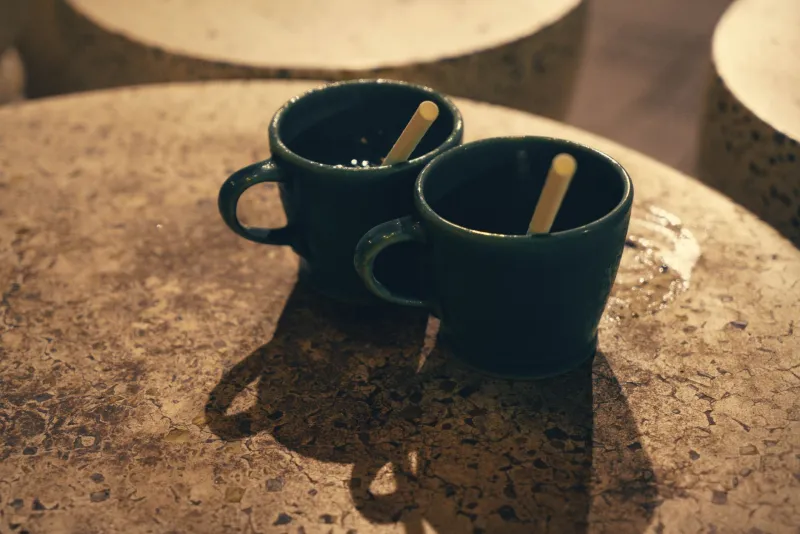
At 1:14, the trailer cuts to an empty diner booth. Two coffee cups. One still steaming. Nobody in the frame.
That's it. That's the second. A steaming cup of coffee and a booth with no one in it.
I rewound it so many times my thumb started to hurt. And here's why it worked: it wasn't a brand beat. It wasn't a product placement. It wasn't a slow-motion walk toward a helicopter. It was a story problem. Someone was just there. Someone left in a hurry. The movie, at that moment, told me what it was about without saying a word. Absence. The kind you can still feel in a room.
Compare that to 1:28, when a character walks past a parked car with a logo so clean it might as well have been rendered by the marketing department. That's a product tie-in. It's fine. It's not evil. But it didn't sell me the movie. It sold me a co-branded landing page.
The difference between those two moments is the whole game.
How to Tell a Trailer From a Mood Board
After 47 views, I started keeping a mental checklist. It's not scientific, but it has saved me from a lot of manufactured excitement. Here's what I ask myself now:
- Does the trailer have a beat that only works in the movie? The coffee cup works because it creates a question. A shot of a car driving fast works in any movie. One is a scene. The other is a screensaver.
- When the music drops, does anything happen? If the silence is just a pause before another drop, it's a soundtrack. If the silence reveals something — a line, a look, a detail — it's a story.
- Is the product placement doing a job? A character drinking a soda because they're nervous is a choice. A soda can placed at the exact center of the frame with the label facing camera is a billboard. Both can exist. Only one is storytelling.
- Would this trailer still work with the logos removed? If yes, you're probably watching a movie. If no, you're watching a brand presentation with extra steps.
- Does the hype come from the trailer or the campaign around it? Countdown posts, sponsored reactions, and "first look" exclusives are momentum. They're not evidence. The trailer has to earn it on its own.
What 47 Rewatches Actually Taught Me
I didn't come out of this loving Glass Harbor more than I expected. I came out of it respecting the craft of one specific cut. The trailer is not a masterpiece. The first minute is a mood board. The last 20 seconds are a standard action montage. But that middle section — 1:12 to 1:19 — is the kind of thing that makes me want to buy a ticket.
And it's also the kind of thing that gets buried when a campaign is too loud. The seltzer tie-in got more engagement than the coffee cup. The sponsored reaction stream got more views than the trailer's own comments section. That's the machine. It's not going anywhere. But it's not the reason I'll show up on opening night.
The reason is a timestamp. 1:14. Two cups. One still steaming. A question I need answered.
So now I have a new habit. When a trailer gets hyped, I watch it once. Then I watch it again with the sound off. Then I look for the second that makes me lean forward. If I can't find it, I close the tab. If I can, I write down the timestamp.
This year, I wrote down 1:14. And I'll be in the theater in 2026 to find out who left that coffee behind.