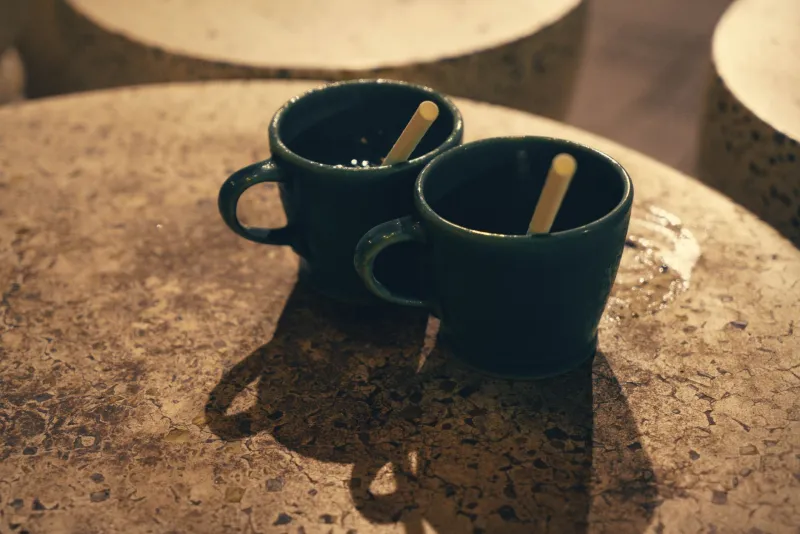
The Mug Doesn’t Lie: I Audited Every Brand Moment in 12 New 2026 Holiday Rom-Coms
Photo: Edvard Munch, Public domain, via Wikimedia Commons
I did not go into this wanting to be the brand-placement hall monitor. I wanted to be a person on a couch with a cocoa mug, watching people fall in love in coats. But the 2026 holiday rom-com boom has gotten loud, and the logos have gotten louder. So I turned it into a project: 12 new releases, one pause button, and a spreadsheet that made my group chat ask if I was okay.
Over two weekends, I watched Snowbound in Silver Lake, The Christmas List of Wrong Turns, Mistletoe on the Marquee, A Very Last-Minute Wedding, December at the Drive-In, The Cookie Swap Pact, Holiday Lights Big City, My Fake Boyfriend’s Family Ski Lodge, The Twelve Dates Before Christmas, Hot Cocoa and Other Liabilities, The Ugly Sweater Inheritance, and New Year’s Eve at the Bluebird. I logged 31 visible brand moments — some spoken, some held, some lit like they had their own trailer. Then I ranked each one with a single question I now call the cocoa-mug test.
The Rules of the Cocoa-Mug Test
Here is the test: if this character were in this exact scene, would she plausibly be holding this product — or would she be holding a mug of cocoa instead? If the product replaces the mug naturally, it passes. If the scene rearranges itself so the label faces camera, it fails.
I graded each placement on three things: character logic, camera behavior, and plot necessity. Character logic means the person using it has a reason that exists outside the ad. Camera behavior means the director does not treat the logo like a guest star. Plot necessity means the product helps the story move, not pauses it for a pitch.
I am not anti-brand. I do brand collabs. That is exactly why I am picky. A good placement should feel like evidence of a life, not a break in the fantasy.
The Three Placements That Earned a Sip
1. December at the Drive-In
The win here was a thermos. The main character runs a failing drive-in, and she pours cocoa from it during a cold projection-booth scene. The logo is visible once. Nobody says the brand name. Nobody praises the insulation. The thermos has a job: it keeps two people warm while they have the awkward conversation the movie is actually about. Grade: A.
2. The Cookie Swap Pact
A stand mixer shows up in a baking contest scene, and the character complains about the dough hook before using it. That tiny complaint did more for the placement than any slow-motion hero shot could. It felt inherited, slightly annoying, and real. The brand was visible, but the scene belonged to the cookie swap, not the appliance. Grade: A-.
3. Mistletoe on the Marquee
A rideshare app actually caused the meet-cute. The characters get stranded because one of them orders the wrong car, and they argue about splitting the fare. The app screen appears briefly, then the movie moves on. That is the difference between integration and interruption: the product created a problem, and the characters had to live inside it. Grade: B+.
The Ones That Pulled Me Out of the Story
1. Snowbound in Silver Lake
A stranded couple spends roughly 25 seconds praising a luxury SUV’s heated seats and traction. In a blizzard. While supposedly fearing for their lives. The vehicle looked great. The scene looked like a commercial with snow on it. Grade: D.
2. The Christmas List of Wrong Turns
A coffee cup is placed label-out in every single scene, including one where the character is sprinting through an airport. I do not need a cup to be subtle, but I do need it to obey physics and shame. Grade: D-.
3. My Fake Boyfriend’s Family Ski Lodge
A sparkling water brand gets a full-family toast and a slogan. At a ski lodge. In December. Nobody in that room would have said those words in that order. Grade: F.
The Pattern Behind the Flops
The bad placements all made the same mistake: they turned characters into pitch people. The camera lingered. The dialogue got weirdly formal. The product solved a problem too neatly, as if the writer had a deadline and a brand deck. The good placements did the opposite. They gave the product a small, believable job and let the characters have opinions about it.
The middle of my ranking was full of placements that were fine but forgettable — a streaming device here, a snack bag there, a department-store bag that looked planted but did not ruin anything. Fine is not a crime. But fine does not earn a sip.
What Creators Should Steal for Their Own Holiday Collabs
First, give the product a job, not a monologue. If it can be held, poured, opened, worn, or complained about during a real conversation, it has a better chance of surviving the cocoa-mug test.
Second, let the character have a flaw or an opinion. 'I hate this lid' is more believable than 'I love this brand.' A tiny friction point makes the placement feel human.
Third, shoot it like evidence, not a billboard. One clear look is enough. The slow push toward a logo is how you lose the room.
Fourth, tie the product to a ritual. Cocoa, cookie swaps, drive-in movies, gift wrapping, the awkward family toast — rituals already have props. If your product fits the ritual, it fits the scene.
The Mug Doesn’t Lie
By the end, I had cocoa stains on my notebook and a very simple conclusion. The best 2026 holiday rom-com placements were not the biggest or the most expensive. They were the ones that could survive if the camera kept rolling and nobody said the brand name. That is also the question I now ask my own pitches: would this still work if the audience forgot they were watching a collab? If yes, sip. If no, spill.